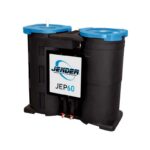
Condensate drains for compressed air
Condensate drains remove the water that accumulates at the low points of a compressed air installation: air receivers, filter bowls, dryers, and downward sections of the network. If condensate is not removed, it is eventually carried along by the airflow and reaches tools and machinery, causing corrosion, breakdowns, and defects in finishes.
Available in four types depending on the level of automation required at each point of the installation: manual, float, timed, and electronic capacitive.
Types of condensate drains
Manual drain valve
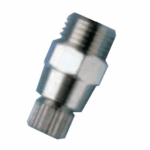
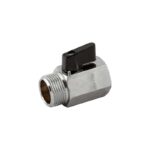
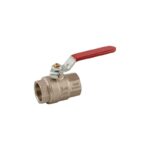
The simplest and most economical option. A 1/4″ valve that the operator opens manually to drain accumulated condensate. Suitable for small installations or secondary points where water accumulation is minimal and someone checks the system daily.
Float drain
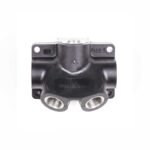
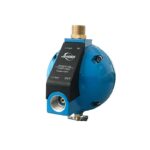
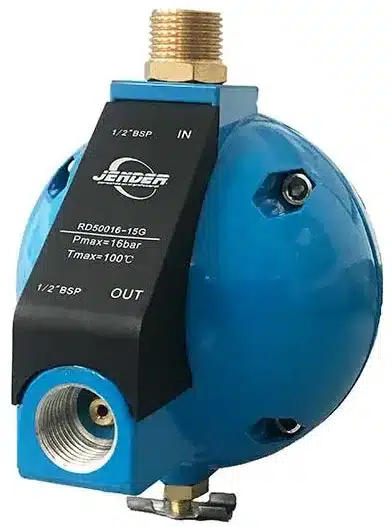
Operates without electricity. An internal float rises when the condensate level reaches a certain point and automatically opens the discharge valve. When the water is evacuated, the float drops and closes. Working pressure from 0 to 16 bar, 1/2″ connection. It is the most reliable drain for points without a power supply, such as the bottom of the air receiver or low points in the network.
Timed drain
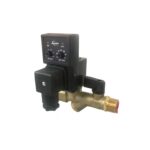
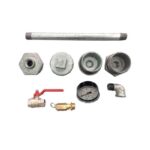
Opens and closes at programmable intervals via an electronic timer. The user sets the frequency and the opening duration. It is effective, but it can waste compressed air if it opens when there is not enough condensate, or allow water to accumulate if the interval is too long for the actual condensate production.
Capacitive drain
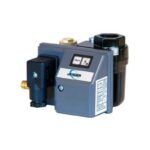
The most efficient option. A capacitive sensor detects the actual condensate level and opens the valve only when there is water to evacuate. It does not waste compressed air unnecessarily and ensures condensate is always discharged on time. Recommended for industrial installations with variable demand and where the energy cost of compressed air justifies the investment.
Where drains are installed in the compressed air network
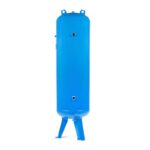
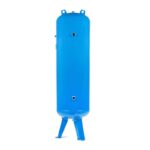
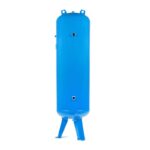
Typical drain installation points are the bottom of the air receiver (where the greatest amount of condensate accumulates due to air cooling), the outlet of the refrigerated dryer, the bowl of each line filter, and the low points of the piping where gravity causes water to settle.
In a well-designed installation, each of these points has its own drain. The air receiver usually has a float or capacitive drain due to the volume of water it generates. Filters often include their own automatic drain. And low points in the network can be addressed with float drains or manual valves depending on accessibility.
Do you need help with your compressed air installation?
Leave us your details and we will contact you in less than 24 hours.
Power (hp/kW)
Pressure (bar)
Design
Tank capacity (litres)
Drive
Variable speed drive
Código
Articulo
Imagen
Precio
Pedido
Contact Jender
Get in touch with us and our team of experts will advise you on everything you need.